
Read Greene County Property Tax Records
Each field on a Greene County tax bill matters. Assessment sets a value for taxing, deductions shrink the taxable base when a parcel qualifies, and rates from each taxing unit drive the charges. Treasurer entries show what was billed and paid.
| Field | What It Shows | Where |
|---|---|---|
| Gross assessment | Value before deductions | Assessment detail |
| Deductions | Approved reductions | Auditor and tax detail |
| Taxable assessment | Value remaining after deductions | Tax calculation |
| Tax bill and status | Charges, payments, and balance | Treasurer detail |
| Taxing districts | School and local tax units | Property information |
A tax bill will not price the property. Indiana ratio studies test assessed values against valid sales across the market, yet one recorded price remains a fact about a single transaction. Assessment, taxable assessment, and the amount due must stay separate.
Search Greene County Tax Lists
Both the Treasurer tax list and the Auditor tax list accept a district number, parcel number, owner name, tax year, or property address. Start with one strong field. Too much input can hide the match, and for a recent split or combination the owner's last name often works best.
| Search field | Best use | Check |
|---|---|---|
| District | Limit tax geography | Match township or city context |
| Parcel | Exact property tax lookup | Try full and shortened forms |
| Name | Find roll entries | Use exact entity variants |
| Tax year | Choose the bill cycle | Keep year beside amounts |
| Address | Locate a known site | Do not confuse mailing address |
The CGI pages can be temperamental. Save the WTH parcel number and retry later rather than trusting an unofficial listing for a Greene County tax search.
Look Up a Greene County Tax Bill
Precise lookups need the right parcel and year. When the parcel number is unknown, Greene County WTH maps the property and shows its identifier. Read both installments and every posted payment.
- Find the parcel by address and copy the full county identifier.
- Search the tax list by parcel and select the intended year.
- Read gross assessment, deductions, taxable assessment, spring and fall charges, payments, and balance.
- Confirm tax and school districts, then review an official tax-sale notice if delinquency matters.
- Assessed value
- The value placed on property for Indiana tax purposes.
- Taxable assessment
- The amount left after applicable deductions.
- Levy or rate
- The local charge applied through the taxing-unit calculation.
- Homestead deduction
- Statutory relief that may reduce a qualifying parcel's taxable amount.
- Tax lien
- A public claim tied to unpaid property taxes.
Track Greene Assessment Dates
The WTH sample card spans assessment years 2021 through 2025, each with its own as-of date and reason code AA. Those values are not certified. Copy both the assessment year and the as-of date whenever you compare change over time. The DLGF assessed-value search remains the official state route for confirming a Greene County assessment.
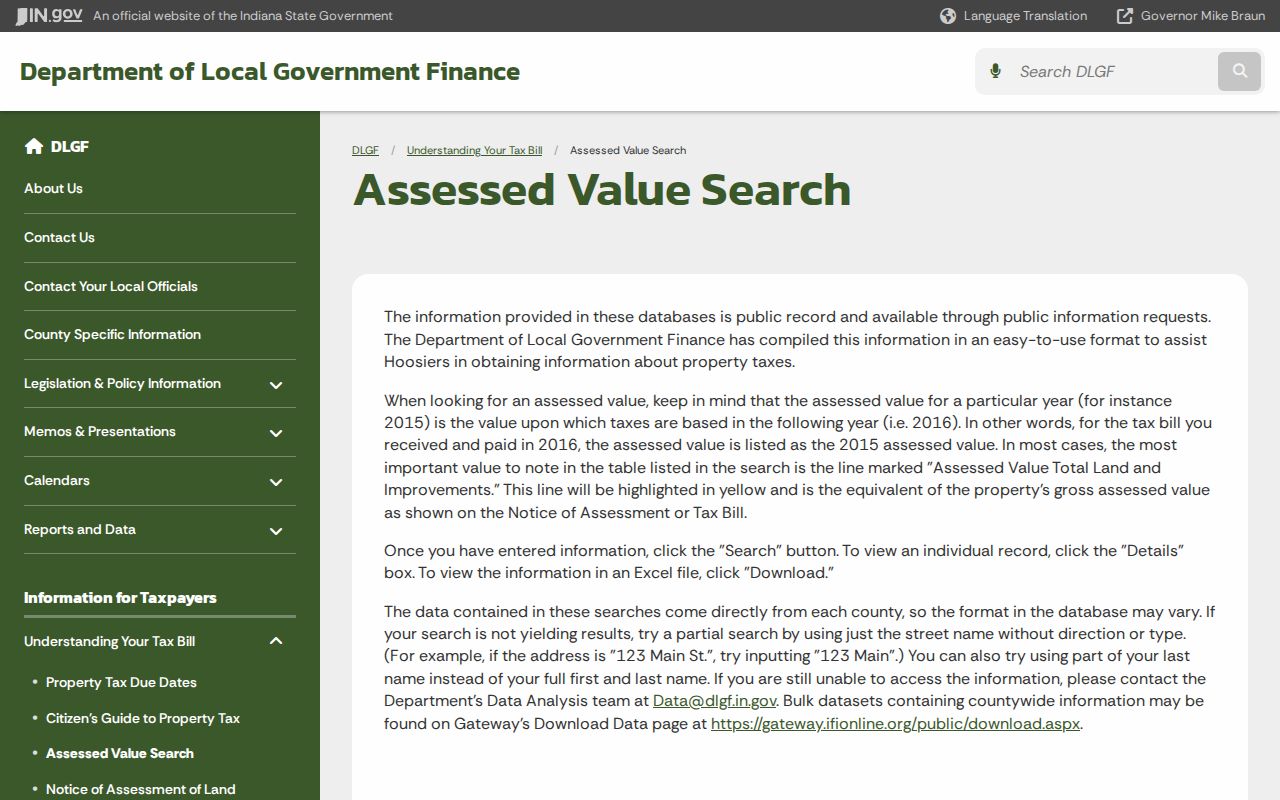
The state tool's county links carry a lag warning. Confirm values with Greene County. Indiana's cyclical reassessment begins July 1, 2026 for 2026 Pay 2027. About one quarter of parcels undergo physical inspection each year over four years, so a value can shift even when no deed was recorded.
Compare Greene Values and Sales
The DLGF ratio study divides assessed value by sale price. This tests how well assessments track market value-in-use. That math will not turn an old transfer row into a current market estimate. The WTH sample holds traps. Zero-dollar entries and a 1900 placeholder need deed or sales-disclosure review before they mean anything.
Keep three figures distinct. A sale price describes one deal. Assessed value supports taxation. Taxable assessment reflects deductions. The full Greene County property value comparison explains each role. It does not treat the tax bill as an appraisal.
Read Greene Tax Due Dates
DLGF posts Indiana's 2026 property-tax due dates as May 11 and November 10. Mark both on the calendar. The state due-date page explains penalties and sends payment questions to the county Treasurer. Those dates fit one cycle only. A late payment can change the online balance. So save the access date and payment rows, then request an official payoff from the Treasurer when timing matters.
Review Greene Tax Sale Records
A Greene County tax-sale notice can carry parcel identifiers, legal descriptions, minimum bids, and bidder steps. It may also list redemption warnings. The county's 2025 notice scheduled an October 9 sale and required bidder preregistration. Old notices mislead. That notice is not a current sale list.
A listing proves nothing about clear title. Redemption periods and later Recorder or court activity can change the outcome of any tax sale. Check the current notice, the deed index, and Indiana MyCase before relying on a tax-sale record.
Note: Keep the notice date and parcel legal description together, since a later deed or redemption can change the property's status.
Verify Greene Deductions and Districts
Read a Greene County tax detail top to bottom. Confirm the parcel, situs, township, and tax district first. Then compare gross assessment with deductions and taxable assessment. A school district or other taxing unit explains part of the math, but it is not evidence of city limits or ownership.
The WTH sample shows the tax district, school district, gross assessment, deduction, taxable assessment, tax-cap category, unit rates, and prior-year history, all tied to the selected pay year. Deductions do not carry over. A deduction shown in one year should never be assumed for the next. The Auditor handles deduction and tax-roll interfaces. Confirm current eligibility and filing questions through official county and DLGF sources.
A mailing address can sit in another city and still belong to the same tax parcel. Post office names mislead. The situs and legal description control the match. When those conflict with a postal city, trust WTH geometry and district fields over the ZIP alone.
A sample tax bill from the Greene County portal shows spring and fall charges listed separately. Recorded payments appear too. Treat it as a picture of the fields, not a figure that transfers to your parcel. Open the parcel record for the year you care about. If timing matters, ask the Treasurer for a current payoff. Ask the Auditor about any corrected assessment or deduction on the account.
Tax figures can shift after certification, payment, correction, or appeal. Note when you accessed the record. Tell a portal print apart from an official statement. When a redemption deadline or purchase hinges on the balance, get the current amount straight from the Treasurer rather than a cached result.
Appeal a Greene County Assessment
Indiana sends a taxpayer back to the county first. Greene County appeals start with Form 130, filed locally. Strong evidence matters more than argument. Bring a correct property card, land and improvement facts, photos, and comparable sales. The comparable sales should match the parcel and its valuation date. A taxpayer who loses locally can continue the fight through the county board, the Indiana Board of Tax Review, and eventually Tax Court. One denial rarely ends the question. The official Indiana property-tax appeal route lays out each step at the state level.
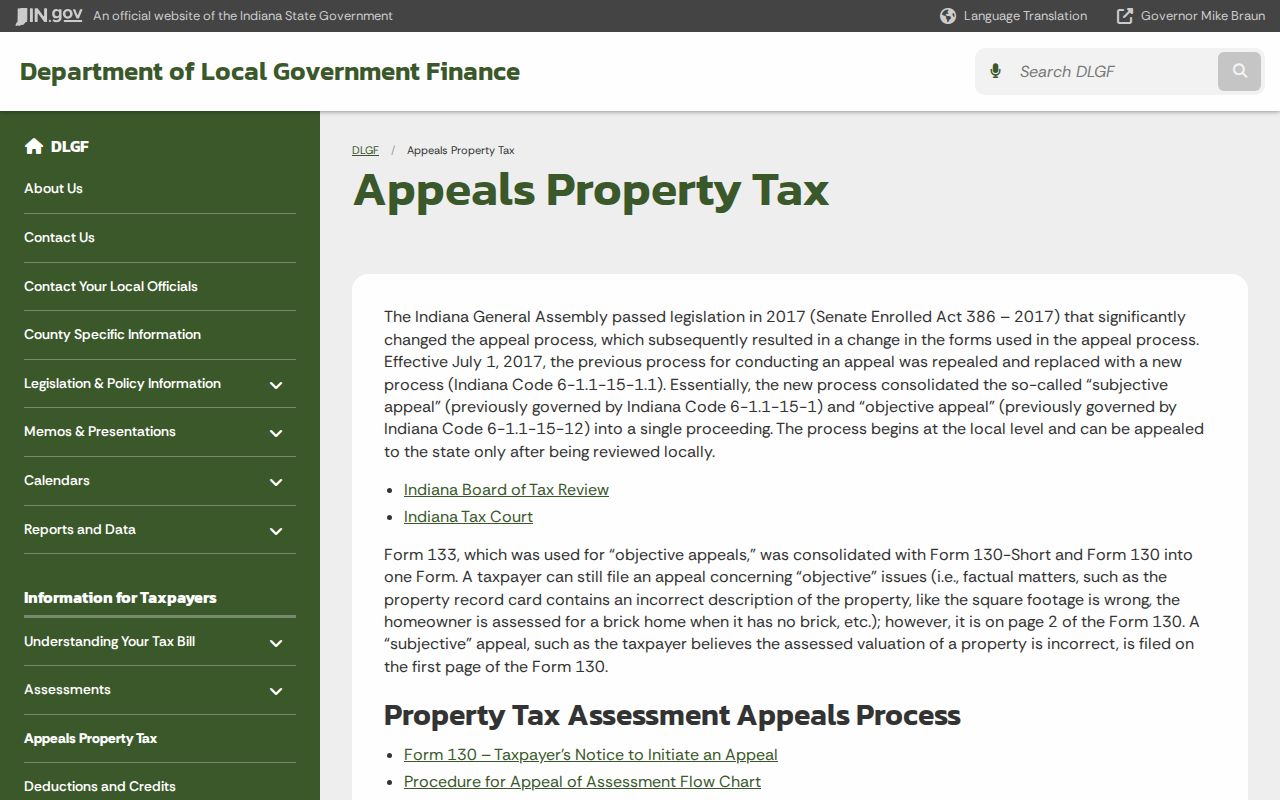
Appealing an assessment in Greene County starts locally but ends at the state level. Read the state steps alongside Greene County's own notice status and deadline.
The current DLGF Greene notice says no Form 11 was mailed. It lists June 15, 2027 as the deadline. It also lists 812-384-2003. Confirm the applicable year and the correct filing route before proceeding.
Appeal window. The current Greene notice gives June 15, 2027, but verify the assessment year, notice status, and filing office before submission.